

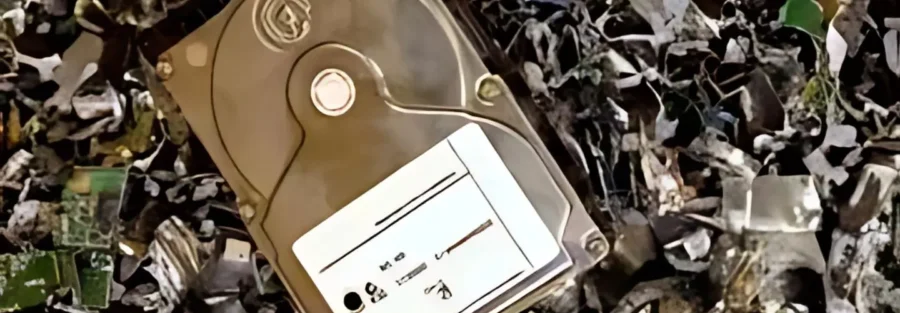
Beyond Deletion: Why Certified Hard Drive Destruction is Non-Negotiable for Data Security
As a mid-level professional aged 25–45, you are constantly juggling operational efficiency with core security demands, often while struggling to maintain focus amidst the pressures of a hybrid work environment. You understand the risk of an unpatched server or a phishing email. But what about the risk hidden in plain sight? What about the retired computers, the decommissioned servers, and the old backup tapes gathering dust in your storage room? These assets—your IT asset disposal (ITAD) backlog—represent a data breach time bomb far more insidious than a single compromised email.
The Problem: The fundamental, often misunderstood issue is the permanence of data on storage media. Many businesses believe that simply deleting files, formatting a disk, or even using basic wiping software is sufficient when retiring IT assets. This belief is dangerously incorrect. Today’s sophisticated data recovery techniques can easily retrieve sensitive corporate, client, and employee data from improperly sanitised media, leading directly to catastrophic regulatory fines, financial losses, and irreparable reputational damage. Learn more about the importance of secure document storage and data protection compliance to understand why proper disposal is vital.
The Solution: The only truly secure, certifiable, and legally defensible method for eliminating the risk associated with retired storage media is professional Hard Drive Destruction. This process moves beyond software-based solutions and guarantees the physical annihilation of the data-bearing platters, chips, and components, ensuring 100% data irretrievability. It is a non-negotiable step in any robust secure data destruction policy. For businesses managing a large number of devices, certified data destruction services provide complete peace of mind with compliance documentation.
In this comprehensive, authoritative guide, we will move beyond deletion to detail precisely why physical Hard Drive Destruction is the only safe endpoint for your sensitive data. We will provide expert advice on compliance and secure document management, discuss advanced strategies, and show how integrating professional data destruction can transform your IT lifecycle from a liability into a compliant, secure asset.
Roadmap: What You Will Learn
- The critical difference between data deletion and certified Hard Drive Destruction.
- The 3 Pillars of Hard Drive Destruction: Security, Compliance, and Environmental Responsibility.
- Advanced strategies for integrating hard drive shredding into a comprehensive IT asset disposal (ITAD) plan.
- Common Hard Drive Destruction mistakes and how to avoid costly errors.
- Detailed answers to your most critical data destruction services FAQs.
The Hard Drive Destruction Foundation: Annihilation, Not Deletion
To appreciate the necessity of physical Hard Drive Destruction, we must first clarify the physics and forensics of data storage. The term “deletion” in a digital context is a misnomer.
When you delete a file (e.g., hitting the Delete key and emptying the Recycle Bin), the operating system does not erase the data itself. Instead, it merely marks the file’s location on the disk as available space, allowing new data to eventually overwrite it. The original data remains intact, often for years, and is easily recovered using simple, widely available forensic software.
Data Sanitisation Methods:
- Logical Deletion/Formatting: Insufficient. Data is easily recoverable.
- Software Wiping/Degaussing (Electromagnetic Destruction): Better, but complex. Software wiping requires multiple overwrite passes and can fail if the drive has bad sectors (leaving data intact). Degaussing is ineffective on modern Solid State Drives (SSDs).
- Physical Hard Drive Destruction: The only 100% guaranteed method. This process, often referred to as hard drive shredding, involves the physical mangling of the media into tiny, non-recoverable particles.
Hard Drive Destruction Defined
Hard Drive Destruction is the systematic, verifiable, and permanent physical annihilation of all data-bearing components within a storage device (HDD, SSD, magnetic tape, mobile device). This process is executed by certified data destruction services and results in the storage media being rendered absolutely useless and data unrecoverable.
The process often involves:
- Shredding: Using specialized industrial shredders to break the drive into small fragments (often
or less), guaranteeing the destruction of the platters and read/write heads.
- Puncturing/Crushing: High-force hydraulic presses or punching devices that physically bend and break the drive platters.
- Certification: Crucially, a Certificate of Destruction is issued for every asset destroyed, providing a legally defensible audit trail required for compliance.
This comprehensive approach is why certified Hard Drive Destruction forms the backbone of all best-practice secure data disposal policies for businesses of any size. It is the only way to genuinely remove the risk associated with end-of-life IT equipment.
If you’re ready to dive deeper into the methods and standards, download our free checklist: The 7-Step Guide to Auditable Secure Data Disposal.
The 3 Pillars of Hard Drive Destruction: Security, Compliance, and ESG
The necessity for robust Hard Drive Destruction rests upon three critical pillars that address the major risks facing businesses today: data security, regulatory compliance, and Environmental, Social, and Governance (ESG) responsibilities, particularly concerning electronic waste recycling.
Pillar 1: Absolute, Irreversible Data Security
Security is the primary driver. Without physical destruction, your most sensitive data remains at risk, even if the drive is sitting in a locked cupboard.
Mitigating the Risk of Sophisticated Data Recovery
Sophisticated techniques, often employed by criminal organizations or industrial spies, can recover data even after multiple software overwrite passes or basic degaussing attempts, particularly if the overwriting process failed due to drive errors. Hard drive shredding reduces the media to fragments smaller than the smallest recoverable data sector. This physical act is the ultimate failsafe, rendering the data mathematically and physically unrecoverable by any technology, providing true peace of mind that simple deletion cannot.
Maintaining Chain of Custody (CoC) Integrity
The single greatest point of risk in the IT asset disposal (ITAD) lifecycle is the moment the drive leaves your premises. A professional data destruction services provider establishes a meticulous Chain of Custody protocol. This starts with serial number logging and security seals at your site, secure transport in GPS-tracked vehicles, and often on-site Hard Drive Destruction witnessed by your staff. This unbroken, auditable CoC is essential for maintaining control and proving that your sensitive data did not fall into the wrong hands during transit, a key requirement for all best-practice secure data disposal policies.
Pillar 2: Meeting Non-Negotiable Regulatory Compliance
Fines for data breaches under frameworks like GDPR are severe, and proof of proper data lifecycle management is often the only defense.
GDPR and Data Destruction as a Legal Requirement
Under the EU’s General Data Protection Regulation (GDPR), organizations have a legal obligation to ensure personal data is processed securely and is “retained for no longer than is necessary.” When an IT asset reaches its end-of-life, the permanent cessation of processing means the data must be irretrievably destroyed. Certified Hard Drive Destruction, supported by a verifiable Certificate of Destruction, serves as the definitive legal proof that you fulfilled your obligation to permanently erase the data, acting as a crucial defense in the event of an audit or inquiry.
Industry-Specific Compliance (PCI-DSS, HIPAA, etc.)
Beyond GDPR, sector-specific regulations demand certified secure data disposal. For financial services, PCI-DSS mandates strict data sanitization before equipment leaves a secure facility. For healthcare, HIPAA requires the final disposition of electronic protected health information (ePHI) to render it unreadable and unusable. In all these cases, a third-party certificate from certified data destruction services confirming physical hard drive shredding is the simplest, most universal way to demonstrate compliance with these stringent mandates.
Pillar 3: ESG and Responsible Electronic Waste Recycling
Modern businesses must demonstrate environmental responsibility, especially when disposing of electronic waste.
WEEE Regulations and Sustainable ITAD
The UK’s Waste Electrical and Electronic Equipment (WEEE) Regulations mandate the environmentally sound disposal of retired IT assets. Hard Drive Destruction and the subsequent electronic waste recycling of the remaining materials (metals, plastics, circuit boards) must be conducted by certified recyclers to prevent hazardous materials from entering landfills. A comprehensive IT asset disposal (ITAD) strategy integrates certified data destruction with responsible recycling, ensuring you meet legal and ethical obligations.
The Circular Economy and Resource Management
The materials recovered after certified Hard Drive Destruction—such as copper, aluminum, and rare earth elements—are directed back into the manufacturing supply chain. By using professional data destruction services that comply with WEEE standards, your organization actively participates in the circular economy, reducing the environmental footprint associated with manufacturing new devices and bolstering your company’s overall ESG profile.
Advanced Strategies and Tools for Hard Drive Destruction
Moving beyond the fundamental necessity, this section provides actionable, expert-level advice on how to integrate certified Hard Drive Destruction into a proactive, cost-effective, and fully auditable business process. This helps the mid-level professional transition from simply reacting to end-of-life needs to strategically managing the entire data destruction lifecycle.
Maximizing Efficiency with Tech: The ITAD Management Ecosystem
Effective secure data disposal today requires a sophisticated ecosystem of tracking and certification tools to manage assets through the destruction process.
Automated Asset Discovery and Inventory
Before destruction can occur, you must know exactly what assets you have. Tools like robust IT Asset Management (ITAM) software automatically scan your network to identify all active and inactive storage media (servers, desktops, laptops, portable drives) nearing end-of-life. This automated inventory prevents “shadow IT” devices from being overlooked, ensuring every single drive is included in the Hard Drive Destruction schedule.
Digital Chain of Custody Tracking Platforms
Modern data destruction services utilize digital platforms that track assets in real-time. Upon collection for hard drive shredding, each drive’s serial number is scanned, photographed, and logged into a system linked to the Certificate of Destruction. This digital tracking replaces error-prone manual logs, providing an irrefutable, time-stamped, and location-verified audit trail from your facility to the shredder, crucial for high-level compliance.
Integration with Decommissioning Workflows
The most efficient strategy is to integrate Hard Drive Destruction scheduling directly into the IT decommissioning workflow. When a desktop is retired, the system automatically tags the hard drive for immediate, certified secure data disposal and alerts the IT asset disposal (ITAD) provider. This automation eliminates the dangerous storage phase where retired drives often sit forgotten, creating unnecessary risk and liability.
Centralized Certificate of Destruction Management
The Certificate of Destruction (CoD) is your most vital piece of legal documentation. Advanced systems provide a centralized, secure digital repository for all CoDs, organized by serial number and date. This allows for instant retrieval during a compliance audit, proving that your Hard Drive Destruction was executed by certified data destruction services, and transforming a paper-heavy process into a streamlined, defensible one.
Ready to implement these tools and integrate certified hard drive shredding into a powerful, automated ITAD system? Book a free 15-minute consultation with a specialist in secure data disposal to map out your compliant data destruction process.
Habit Stacking for Hard Drive Destruction Success
Consistent, secure data disposal relies on institutionalizing habits within the IT lifecycle. This helps the mid-level professional build reliable routines that ensure no device is forgotten.
The ‘Decommissioning and Destruction Tag’ Routine
This habit ensures that destruction is the default action for retired hardware.
- Existing Habit: When a new replacement PC or server is installed and configured.
- New Stacked Habit: Immediately after the data migration to the new machine is verified, the old hard drive is physically removed, a numbered security seal is applied, and a ‘PENDING DESTRUCTION’ tag is attached. This tag automatically flags the drive for the next scheduled pickup by the IT asset disposal (ITAD) provider, formalizing the Hard Drive Destruction requirement at the earliest possible stage.
The ‘Quarterly Secure Disposal Tally’ Routine
This routine prevents the dangerous accumulation of retired assets.
- Existing Habit: The quarterly financial or asset review meeting with the IT budget owner.
- New Stacked Habit: During the meeting, a specific agenda item is dedicated to reviewing the ‘ITAD Destruction Queue.’ This forces the team to tally the number of hard drives tagged for hard drive shredding, verify the destruction schedule with the data destruction services provider, and confirm the receipt of all CoDs from the previous quarter. This ensures the secure data disposal process is fiscally and operationally visible.
The ‘BYOD/Home-Workstation Secure Wipe and Destruction Mandate’
This addresses the risk of data leakage from remote work devices.
- Existing Habit: An employee resigns or their remote-work contract ends.
- New Stacked Habit: The off-boarding checklist includes a mandatory step requiring the remote device (laptop or employee-owned device used for work) to undergo a certified remote software wipe followed by physical retrieval or, ideally, certified on-site Hard Drive Destruction upon return. This ensures the destruction policy extends beyond the corporate walls, reinforcing your overall secure data disposal strategy.
Common Hard Drive Destruction Mistakes and How to Avoid Them
Even with the best intentions, businesses new to formal IT asset disposal (ITAD) often make costly, high-risk errors. Addressing these mistakes directly is vital for success.
Mistake #1: Confusing Data Wiping (Sanitization) with Hard Drive Destruction
The most common, and potentially most expensive, mistake is relying on software-based data wiping as the final step for all media.
Why This Fails:
- SSD Ineffectiveness: Modern Solid State Drives (SSDs) store data differently than traditional HDDs. Standard software wiping tools are often ineffective on SSDs due to wear-leveling algorithms, leaving sensitive data segments intact and easily recoverable.
- Bad Sectors: All drives develop ‘bad sectors’ which are blocked from normal read/write operations. Software wiping cannot access these sectors, meaning any sensitive data stored there remains untouched and available for forensic recovery.
The Solution: Mandate Certified Hard Drive Destruction for Final Disposition
For any drive that will not be reused within the organization (a rare scenario for corporate drives) or refurbished by a certified vendor, the final disposition must be Hard Drive Destruction. Adopt a “Shred for Sure” policy: if the drive contains PII, corporate IP, or financial data, mandatory hard drive shredding by a certified data destruction services provider is the only acceptable route. This is the only way to guarantee the physical destruction of all storage components, including hard-to-reach bad sectors on HDDs and memory chips on SSDs.
Mistake #2: Accepting an Uncertified Chain of Custody (CoC)
Many companies focus on the price of electronic waste recycling or destruction and overlook the critical CoC documentation.
Why This Fails:
- Loss of Accountability: If a retired server is simply picked up and transported by a non-certified general recycler, the moment it leaves your loading dock, all legal accountability and control are lost. If the drive is misplaced, stolen, or improperly destroyed en route, your organization is legally liable for the resulting data breach under GDPR.
- Non-Defensible Audits: Without an unbroken CoC (serial number verification, secure transport, witnessed destruction), you have no defensible proof for an auditor or regulator that the drive was actually destroyed.
The Solution: Demand On-Site Destruction or Rigorous CoC from Certified ITAD
Always use an accredited IT asset disposal (ITAD) partner. For the highest security assets, demand on-site Hard Drive Destruction where the shredding vehicle comes to your location, and your staff can physically witness the hard drive shredding before receiving the immediate Certificate of Destruction. If off-site destruction is necessary, demand a detailed, verifiable CoC with secure, GPS-tracked transport and a guarantee of full serial number verification at every transfer point, ensuring your secure data disposal is entirely accountable.
Hard Drive Destruction FAQs
This section addresses the most common practical, legal, and security concerns related to Hard Drive Destruction.
Q1: What is the most secure method of hard drive destruction, and is degaussing enough?
A: The most secure method of Hard Drive Destruction is physical hard drive shredding that reduces the drive to particle size (typically or less). This is the only method guaranteed to destroy every platter and memory chip, ensuring zero data recovery. Degaussing (using a powerful magnet to scramble the data) is generally effective for traditional magnetic HDDs but is completely ineffective for modern Solid State Drives (SSDs) and many other flash media, which is why it is not considered the gold standard for universal secure data disposal.
Q2: What documentation should I receive after using data destruction services?
A: You must receive a formal Certificate of Destruction (CoD) for every batch of assets. This certificate is your legal proof of compliance. The CoD should include:
- The name and accreditation details of the data destruction services provider.
- The date and location of the Hard Drive Destruction.
- The method of destruction (e.g., shredding, crushing).
- A detailed list of the serial numbers of every drive destroyed, cross-referenced with your initial asset list.
- A clear statement that the destruction meets all relevant standards (e.g., GDPR, WEEE).
Q3: Does Hard Drive Destruction include electronic waste recycling?
A: Yes, certified Hard Drive Destruction is a critical part of a compliant IT asset disposal (ITAD) process. After the hard drive shredding renders the data irretrievable, the remaining metallic and plastic fragments are processed by the certified provider according to the WEEE Regulations and other environmental mandates. This ensures responsible electronic waste recycling and a minimal environmental footprint for the retired assets.
Q4: Should I opt for on-site or off-site hard drive shredding?
A: On-site Hard Drive Destruction is the highest security option. The mobile shredding unit comes to your location, allowing your staff to physically witness the hard drive shredding before the assets leave your control. This eliminates all risk associated with transportation and simplifies the Chain of Custody. Off-site destruction, while often cheaper, requires a highly rigorous CoC protocol to be legally defensible. For highly sensitive data or high-volume assets, on-site is the preferred, non-negotiable choice for secure data disposal.
Q5: How often should I schedule Hard Drive Destruction pickups?
A: Businesses should move away from annual cleanouts, which allow retired, risky media to accumulate. Best practice is to adopt a quarterly or, for larger businesses, a monthly schedule for Hard Drive Destruction. By regularizing the process and integrating it with your IT asset disposal (ITAD) workflow, you drastically reduce the accumulation of ‘forgotten’ storage media, minimizing your overall data risk window and making the process far more manageable.
Q6: Do flash media (USB drives, SSDs) require the same level of Hard Drive Destruction?
A: Yes, they absolutely do, and arguably, the risk is higher. Simple degaussing is ineffective on flash media. Due to their small size and high density, data can persist even after logical failure. For any SSD, USB drive, or mobile device used for corporate data, mandatory physical Hard Drive Destruction (shredding or crushing) is required to ensure the physical chips containing the data are irreparably destroyed, adhering to the highest standards of secure data disposal.
Conclusion: The Finality of Destruction
The time has passed for relying on the false security of the ‘Delete’ button. In a world defined by stringent data regulations and sophisticated recovery techniques, certified Hard Drive Destruction is not an option or an extra service—it is a non-negotiable legal and security imperative for every organization.
By embracing professional data destruction services and implementing mandatory hard drive shredding, your organization achieves something simple deletion can never offer: finality. You gain verifiable proof of compliance, eliminate the catastrophic risk of data recovery from retired media, and complete the IT lifecycle responsibly through proper electronic waste recycling.
Move your organization beyond the reactive mindset of simple deletion and adopt a proactive, auditable, and secure IT asset disposal (ITAD) strategy. This commitment to certified secure data disposal is the ultimate defense of your reputation, your finances, and your ability to maintain focus on your core business goals.
Don’t leave your most sensitive data lying around in a decommissioned server. Take the next step! Sign up for a bespoke, no-obligation assessment of your current IT asset disposal (ITAD) process to fully transform your Hard Drive Destruction strategy and achieve certified, irrefutable security today.
Contact Information
Email: info@sandsdocument.com
Phone: (+44) 790 261 4164
Website: https://sandsdocument.com/