

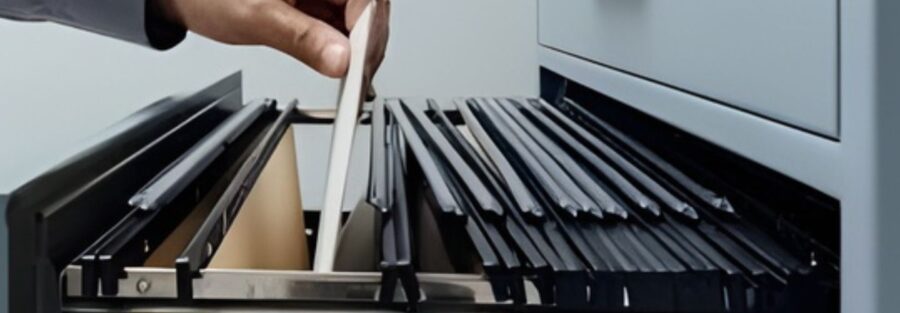
The Ultimate Guide to The Best Way to Manage Sensitive Materials Storage UK: Compliance, Security, and Peace of Mind
For businesses operating in the United Kingdom, the management and Sensitive Materials Storage UK is not merely a matter of good practice; it is a fundamental legal obligation. The confluence of the UK General Data Protection Regulation (UK GDPR) and the Data Protection Act 2018 (DPA 2018) imposes stringent requirements on how organisations collect, process, and, critically, store any information deemed personal or confidential. Failing to adhere to these rules can result in severe financial penalties, irreparable reputational damage, and a fundamental breakdown of trust with customers and employees.
This comprehensive guide is designed to be the definitive resource for any UK business seeking to achieve gold-standard compliance and implement the most secure Confidential material storage solutions. We will delve into the legal landscape, explore the practicalities of both physical and digital storage, and outline the essential steps to protect your assets and your business. The focus remains on providing maximum value through authoritative yet accessible insights, ensuring that your approach to protected sensitive document storage is robust, reliable, and entirely compliant with UK law.
The Bedrock of Compliance: Understanding UK Data Law for Sensitive Materials
Before implementing any storage solution, a deep understanding of the legal requirements is paramount. The legislation mandates that organisations adopt measures that ensure ‘appropriate security’ for all personal data, a requirement that becomes exponentially more demanding when dealing with ‘special category data’—the most sensitive kind of personal information.
Defining ‘Sensitive Materials’ Under UK Law
The terms ‘sensitive materials’ or ‘confidential documents’ broadly encompass any data that, if exposed, could cause significant harm or distress to an individual or material damage to a business. In the context of data law, this primarily relates to personal data and special category data.
Personal Data (UK GDPR)
This is any information relating to an identified or identifiable natural person (a ‘data subject’). This includes:
- Names and contact details.
- Location data and online identifiers (IP addresses).
- Economic information (bank details, salary).
Special Category Data (The Highest Tier of Sensitivity)
This is personal data that requires greater protection due to its sensitivity. Its storage and processing face the highest regulatory scrutiny. Examples include:
- Racial or ethnic origin.
- Political opinions.
- Religious or philosophical beliefs.
- Trade union membership.
- Genetic and biometric data.
- Data concerning health, sex life, or sexual orientation.
Any effective strategy for Sensitive Materials Storage UK must begin with correctly classifying your documents. The security measures applied to a general customer name and address will be insufficient for medical records or biometric data, necessitating a tier-based security approach that directly corresponds to the level of data sensitivity.
The Seventh Principle: Security and Integrity
The UK GDPR is built on seven core principles, and the final one, which addresses security and integrity, is the most relevant to storage. It states that personal data must be: “processed in a manner that ensures appropriate security of the personal data, including protection against unauthorised or unlawful processing and against accidental loss, destruction or damage, using appropriate technical or organisational measures.”
This principle dictates a pro-active, risk-based approach. For Protected sensitive document storage, this means:
- Access Control: Only authorised personnel can view or handle the materials.
- Encryption/Pseudonymisation: Technical safeguards to make the data unintelligible to unauthorised parties.
- Resilience and Recovery: Protecting against loss due to fire, flood, or system failure.
- Destruction: Ensuring the secure and permanent disposal of materials when they are no longer needed (a core service offered by experts).
Organisations must be able to demonstrate compliance (the principle of accountability). This requires meticulous record-keeping, documented policies, and proof of the security measures in place for your Secure UK storage for sensitive materials.

Physical Security: Securing Your Hard-Copy Records
Despite the shift to digital, many businesses still rely on hard-copy records, from signed contracts and HR files to financial ledgers. Managing this paper trail is a critical component of any Sensitive Materials Storage UK strategy.
The Requirements for Controlled-Access Storage Facilities UK
Whether you use an in-house filing system or an off-site archive, the physical environment must meet stringent security standards. The goal is to prevent theft, unauthorised viewing, and environmental damage.
Secure Storage Facilities: In-House and Off-Site Considerations
When evaluating or establishing a storage location, focus on these non-negotiable elements:
Physical Structure and Environment:
- Building Hardening: Reinforced doors, windows, and walls. The storage area should be separated from general office space.
- Fire Suppression: Modern, clean-agent fire suppression systems (like inert gas or dry chemical) that protect documents better than standard water sprinklers.
- Climate Control: Consistent temperature and humidity to prevent material degradation, particularly crucial for long-term protected sensitive document storage.
- Flood Prevention: Storing boxes off the floor and away from potential water sources.
Access Management:
- Layered Security: Implementing security at multiple points—building entrance, floor access, and the storage unit itself.
- Biometric or Key-Card Access: Moving beyond simple key locks to track and restrict entry in real-time. This is a hallmark of truly controlled-access storage facilities UK.
- Visitor Logging: Maintaining a strict, mandatory log of all personnel (including cleaning and maintenance staff) who enter the storage area, and ensuring they are constantly supervised.
Best Practice for Document Handling and Indexing
Security is not just about the container; it’s about the process. Poor internal document management can undermine even the most secure facility.
- Audit Trails: Every movement of a sensitive file—check-out, check-in, scanning request—must be recorded. This audit trail is crucial for demonstrating accountability under UK data law.
- “Need-to-Know” Access: Ensure access is granted only to those employees who absolutely require the information to perform their duties. This principle of least privilege minimises internal risk.
- Secure Transport: If documents must be transported (e.g., to be digitised or to a shredding facility in London or elsewhere), they must be in locked, sealed containers and transported by vetted, DBS-checked personnel.
For businesses seeking to transition from cluttered, non-compliant in-house filing to a secure, auditable system, S&S Documents Shredding provides advisory services that map your documents to a secure, legally compliant storage and destruction cycle. Find out more here.
The Digital Fortress: Secure Electronic Data Storage
For most businesses, Sensitive Materials Storage UK is now predominantly a digital challenge. Cloud storage, internal servers, and back-up media all fall under the scope of UK data law, and the measures required are technical, organisational, and often complex.
Essential Technical Safeguards for Digital Storage
The security principle requires ‘appropriate technical measures.’ These are the tools that build your digital fortress.
Robust Encryption: The Non-Negotiable Requirement
Encryption is the single most important technical control for digital protected sensitive document storage. It transforms data into an unreadable format, making it useless to a hacker even if the system is breached.
- Encryption at Rest: Data stored on a server, hard drive, or cloud service must be encrypted. Full Disk Encryption (FDE) for local devices and AES-256 bit encryption for data stored in the cloud are industry-standard requirements.
- Encryption in Transit: Data being moved—uploaded to the cloud, downloaded, or emailed—must be protected using protocols like TLS/SSL.
- Key Management: The encryption keys must be managed separately and securely from the encrypted data itself (the ‘separation of keys’ principle).
Cloud Storage and UK Jurisdiction: A Critical Review
Using third-party cloud services for Confidential material storage solutions can be highly efficient, but it introduces legal complexity regarding where the data is physically located.
- Location, Location, Location: While the UK GDPR applies regardless of where the data is processed, storing sensitive data outside the UK or EEA requires a deeper level of due diligence. You must ensure the third-party country’s legal system provides an ‘adequate’ level of protection or that specific safeguards (like Standard Contractual Clauses) are in place. Secure UK storage for sensitive materials is often the path of least risk, as the data remains under the direct jurisdiction of UK law.
- Data Processor Due Diligence: The UK GDPR makes you, the Data Controller, ultimately responsible. You must rigorously vet any cloud provider (the Data Processor) to ensure they meet your security and compliance standards. Ask for their ISO 27001 certification, penetration test reports, and details on their access control protocols. For example, businesses in Colchester should prioritize providers that can demonstrate UK-specific compliance.
Organisational and System Security Measures
Technical tools are useless without robust organisational processes to manage them.
Access Control and Zero-Trust Principles
Digital access must be as strictly managed as physical access in any controlled-access storage facilities UK.
- Multi-Factor Authentication (MFA): Mandatory for accessing any system containing sensitive data. A password alone is no longer considered ‘appropriate security.’
- Principle of Least Privilege: Users should only have the minimum permissions necessary to do their job. An employee in HR should not have read/write access to confidential financial or R&D documents.
- Regular Auditing: Access logs must be regularly reviewed for unusual activity, and user permissions must be revoked immediately when an employee changes roles or leaves the company.
Document Lifecycle Management: Retention and Secure Destruction
Compliant Sensitive Materials Storage UK is not a static state; it is a continuous lifecycle. A key legal principle of the UK GDPR is Storage Limitation: personal data shall be kept in a form which permits identification of data subjects for no longer than is necessary for the purposes for which the personal data are processed. Keeping documents for too long is as much a breach of compliance as losing them.
Developing a Robust Document Retention Policy
A legally sound retention policy is the blueprint for compliant storage and destruction.
Calculating Legal and Business Retention Periods
To comply with the ‘Storage Limitation’ principle, you must define clear, justifiable retention periods for every category of sensitive material.
- Legal/Regulatory Obligations: Certain documents have mandatory retention periods, such as financial records (usually 6 years plus the current year) and employment contracts. These trump all other considerations.
- Contractual Requirements: Some client or partner contracts may specify how long their data must be held.
- Business Necessity: Data can be kept for as long as it is required for its original, stated purpose. Once that purpose is fulfilled—and no other legal basis applies—the material must be securely destroyed. This is a vital part of document lifecycle management.
The Central Role of Secure Destruction
Retention policies ultimately lead to destruction. When the legal or business need expires, documents transition from protected sensitive document storage to the mandatory need for permanent, irreversible destruction.
- Physical Destruction: For paper records, certified, high-security paper shredding is the only acceptable method. This service must be provided by a reputable partner like S&S Documents Shredding, who can guarantee a secure chain of custody and issue a Certificate of Destruction. This certificate is your ultimate proof of compliance under the accountability principle.
- Digital Destruction: Simply deleting a file is not enough. Digital media (hard drives, backup tapes, SSDs) must be destroyed through physical means (shredding, disintegration) or irreversibly overwritten/degaussed to national security standards. We recommend certified hard drive destruction for obsolete media.
Is your business keeping documents past their legal retention date, creating a hidden liability? S&S Documents Shredding specialises in compliant, certified destruction services for all types of Confidential material storage solutions, ensuring your paper and digital waste is permanently eliminated. Contact us today for a free, no-obligation compliance audit of your document retention schedule and secure your data.
Selecting the Right Secure UK Storage for Sensitive Materials Partner
Outsourcing your Sensitive Materials Storage UK to an archive or document management company can be an excellent risk mitigation strategy, provided you choose the right partner. When evaluating potential controlled-access storage facilities UK or service providers, due diligence is everything.
Due Diligence: A Partner Selection Checklist
Your partner effectively becomes an extension of your business and a ‘Data Processor’ under the UK GDPR. Their security becomes your security.
Security Standards and Certifications
A top-tier document storage partner should hold verifiable, externally audited accreditations.
- ISO 27001 (Information Security Management): This is the gold standard, demonstrating a systemic and audited approach to managing sensitive company and customer information.
- ISO 9001 (Quality Management): Demonstrates commitment to consistently meeting customer and regulatory requirements.
- BS EN 15713 (Secure Destruction of Confidential Material): Essential for any partner also offering secure shredding services, proving their process for handling and destroying confidential materials is certified.
Physical and Digital Access Controls
Go beyond simple guarantees and demand to see the specifics of their security protocols.
- CCTV and Monitoring: Is surveillance 24/7? Is it externally monitored? How long are the recordings kept? We are committed to transparency in our about us page.
- Perimeter and Unit Security: Does the facility have a secure perimeter? Are individual storage units alarmed?
- Personnel Vetting: Are all staff, especially those with access to the floor, DBS (Disclosure and Barring Service) checked and subject to ongoing background checks?
- Data Processor Agreement (DPA): Ensure a legally robust DPA is in place, clearly defining their responsibilities and liabilities as a data processor under the UK GDPR.
A fully vetted partner provides a compliant solution for secure UK storage for sensitive materials, effectively de-risking a major area of data protection compliance for your business.
The Accountability Principle: Documentation and Training
The principle of accountability requires that the data controller is responsible for and must be able to demonstrate compliance with the UK GDPR principles. This final section outlines the essential non-storage elements that make your entire system legally sound.
Comprehensive Policies and Impact Assessments
Your compliance documents are the proof that your Sensitive Materials Storage UK strategy is not accidental, but intentional and structured.
Data Protection Impact Assessments (DPIAs)
If you are implementing new storage technology, changing a process that handles special category data, or outsourcing your protected sensitive document storage to a new provider, you are likely required to conduct a DPIA.
- Purpose of a DPIA: It systematically identifies, assesses, and mitigates the data protection risks inherent in your processing operations. It forces you to think through what could go wrong and how your security measures (like encryption or access controls) mitigate that risk.
- Record-Keeping: The outcome of the DPIA, and the decision to implement or modify the process, must be formally recorded and maintained.
Staff Training and Human Firewalls
The weakest link in any security chain is always the human element. The best Confidential material storage solutions and technical systems can be undone by a single, untrained employee.
- Mandatory, Recurring Training: All staff who handle or have access to sensitive materials—physical or digital—must undergo mandatory, regular training on data handling, security policies, and how to spot a security threat (e.g., phishing).
- Reporting Procedures: Employees must know the exact procedure for reporting a suspected data breach or a security lapse immediately. A delay in reporting can be as costly as the breach itself.
By investing in human capital, you build a “human firewall” that supports your secure systems, ensuring that your controlled-access storage facilities UK protocols are adhered to on a daily basis.
Frequently Asked Questions (FAQs) on Sensitive Materials Storage UK
What is the difference between Personal Data and Special Category Data, and why does it matter for my Sensitive Materials Storage UK?
The difference is crucial. Personal Data (e.g., a name and email) requires ‘appropriate security.’ Special Category Data (e.g., health or biometric data) is defined as being more sensitive and is subject to stricter rules, including the need for a separate condition for processing under Article 9 of the UK GDPR. In practical storage terms, special category data necessitates a higher level of security—stronger encryption, more granular access control, and potentially isolation from other data sets—to meet the compliance burden of protected sensitive document storage. This applies to records like X-ray and medical film storage.
How long should I keep confidential paper documents under UK data law?
There is no single answer; it depends entirely on the purpose. The UK GDPR’s ‘Storage Limitation’ principle states you can keep it “no longer than is necessary.” You must first check specific legislation (e.g., HMRC mandates keeping accounting records for 6 years plus the current year). If no law applies, the duration must be defined in your documented Data Retention Policy and must be justifiable by a business purpose. Keeping documents ‘just in case’ is a breach. Once the period expires, certified secure destruction (a key service from S&S Documents Shredding) is mandatory, such as using secure shredding bins for offices.
Can I use a standard public self-storage unit for my Confidential material storage solutions?
Generally, no. Standard public self-storage units rarely meet the ‘appropriate security’ and accountability standards required for legal Sensitive Materials Storage UK. They often lack the required layered access controls, verifiable audit trails, professional climate control, and certified fire suppression systems. A compliant solution requires a purpose-built facility or a managed archive service that can demonstrably adhere to standards like ISO 27001, making them true controlled-access storage facilities UK.
If I use a cloud provider, how do I ensure their Secure UK storage for sensitive materials is compliant with UK GDPR?
You must have a formal Data Processor Agreement (DPA) with them that legally obligates them to meet UK GDPR standards. Furthermore, you should conduct rigorous due diligence, verifying their security certifications (ideally ISO 27001), reviewing their data residency policies (where the data is physically stored), and demanding transparency on their security protocols, including encryption methods and breach notification procedures. You remain the data controller and carry the ultimate responsibility. You can also utilize our file and box retrieval service to manage the transition to secure digital storage.
What is a Certificate of Destruction, and why is it essential for compliance?
A Certificate of Destruction is a formal, legally binding document issued by a certified destruction company (like S&S Documents Shredding) confirming that your confidential materials were permanently and securely destroyed on a specific date, in compliance with industry standards (e.g., BS EN 15713). It is the critical final piece of the accountability puzzle, serving as undeniable proof that you met your legal obligation to dispose of data once the retention period for your protected sensitive document storage expired. This is crucial for all forms of destruction, including secure media destruction service.
My documents are shredded in-house using an office shredder. Is this sufficient for Protected sensitive document storage?
It is highly risky and often insufficient. Standard office strip-cut or even cross-cut shredders may not render the material irretrievable, especially in large volumes. Compliant destruction requires industrial-grade, cross-shredding to a minimum particle size as defined by BS EN 15713. Additionally, in-house shredding lacks the crucial element of an auditable chain of custody and a Certificate of Destruction. For legal compliance and maximum risk mitigation, always use a certified, professional shredding service, especially for business paper shredding needs.
How does S&S Documents Shredding help businesses with digital records and Sensitive Materials Storage UK?
While our name includes “Shredding,” we offer a full suite of document management services. This includes document scanning services to convert physical records to secure digital files, digital file organization, and secure long-term storage for both physical archives and backup media. By digitising your records, we help reduce the footprint of your physical controlled-access storage facilities UK needs and enhance digital compliance with services like digital file organization.
What should I do if I have confidential documents stored in a location like Chelmsford that I need to securely destroy?
You should contact a certified provider immediately. A provider like S&S Documents Shredding offers services across many locations, ensuring a secure, audited process from collection at your site (e.g., in Chelmsford) to certified destruction. The process involves secure collection, transport, shredding to required standards, and the issuance of a Certificate of Destruction to guarantee compliance for your Secure UK storage for sensitive materials.
Conclusion: Achieving End-to-End Compliance
The task of managing Sensitive Materials Storage UK is complex, but with the right structure, policies, and partners, it is entirely achievable. Compliance is a cycle of assessment, implementation, training, and certified destruction. By classifying your data correctly, establishing robust physical and digital security, adhering to the principle of storage limitation through strict retention policies, and securing your destruction through a certified partner, your business can confidently navigate the demanding landscape of UK data law.
Ultimately, secure storage is not just about avoiding fines; it’s about building a foundation of trust that protects your company’s reputation and guarantees the privacy of every individual whose data you hold. You can read more about data protection on our blog.
Don’t let non-compliant storage create an unnecessary liability for your business. Partner with S&S Documents Shredding today to secure the final, critical stage of your document lifecycle. We provide certified, auditable, and secure destruction services for all physical and digital Confidential material storage solutions, giving you the irrefutable evidence of compliance you need. Book online now for a consultation on your secure document destruction needs.